
Why evaluate batteries for water pumping?
A battery can make water transfer possible where a convenient mains supply is unavailable. Potential project types include portable transfer units, small irrigation equipment and mobile cleaning systems. Grundfos documents battery-backed renewable-energy water supply as an established system architecture. This does not mean its pumps use LG MJ1 cells, or that a small lithium-ion pack can replace the specified battery bank. [1]
Begin with the pump duty, not the cell capacity
Give the battery designer the pump voltage range, required flow and pressure, running time per session and number of starts per day. Motor startup and repeated pressure-switch cycling should be measured at representative hydraulic loads. Pentair publishes model-specific voltage and current information for its diaphragm pumps, illustrating why one generic pump-current figure is insufficient. No supply relationship between those pumps and BK Energy is asserted. [2]
Where LG MJ1 fits in the evaluation
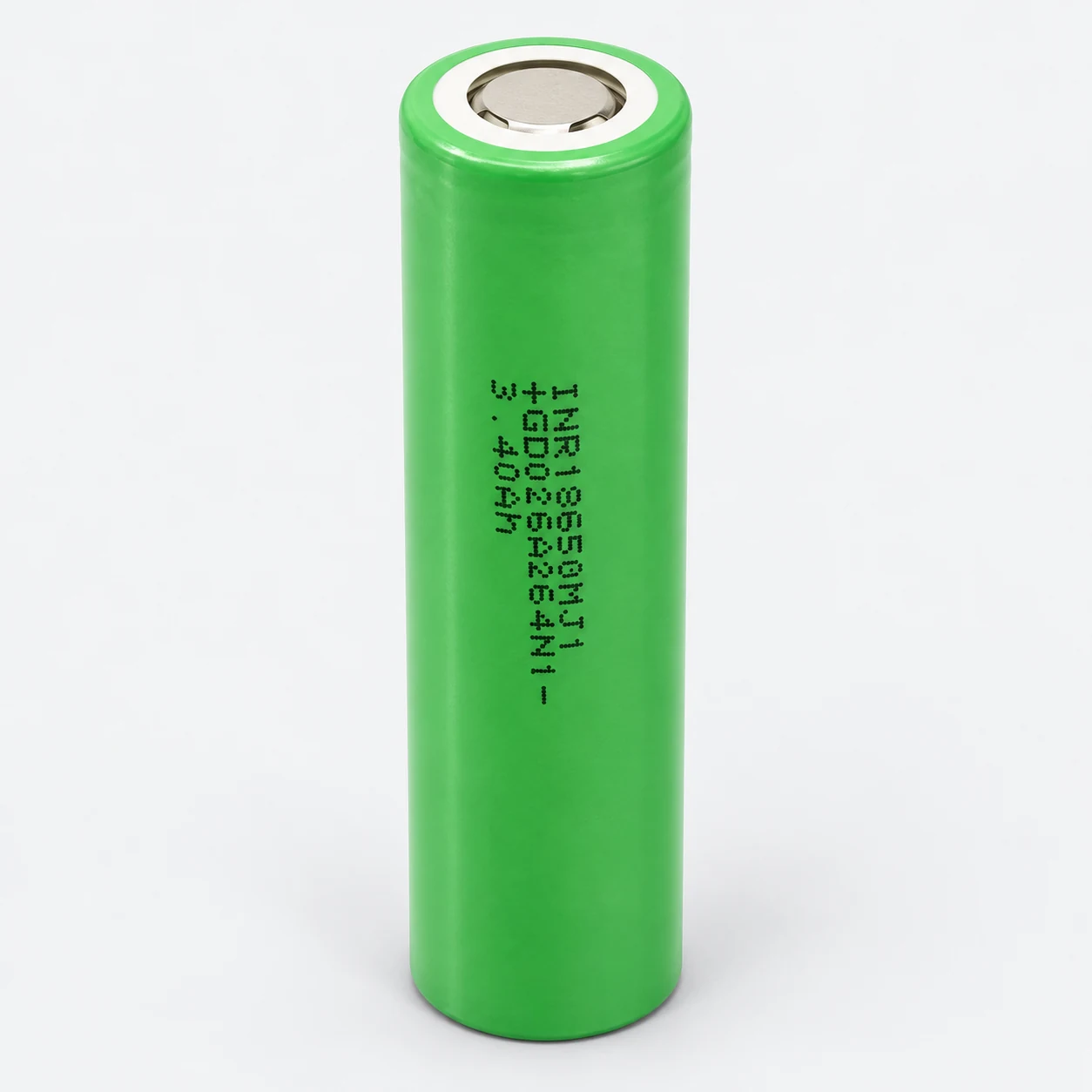
Our LG 18650-MJ1 reference lists 3500mAh nominal capacity, 3400mAh minimum capacity and 3.635V nominal voltage. The reviewed specification makes full-discharge current temperature dependent: 10A at 10–25°C ambient, with lower limits outside that range. Keep those conditions attached to the rating. MJ1 can enter a shortlist for runtime-oriented water pump battery development, but suitability depends on measured load and thermal results, not the application label.
Estimate energy, then test delivered runtime
As a planning method, required usable watt-hours equal average electrical input watts multiplied by operating hours. Allow for conversion losses, aging, temperature and the reserve needed before the BMS disconnects. For intermittent pumping, calculate the duty cycle rather than assuming continuous operation. Measure delivered runtime under the intended pressure and flow; nominal cell capacity cannot guarantee a runtime claim.
Match voltage and current at the pack level
Select the series count against the pump and controller input window from full charge to discharge cutoff. A nominal 12V pump is not automatically compatible with every lithium-ion pack sold under a 12V label. Choose parallel count using both steady demand and measured startup peaks. Validate voltage sag, connection heating and BMS trip behavior during repeated starts, including operation near the allowed discharge limit.
Protect the battery around water
A cylindrical cell is not a waterproof assembly. Review enclosure sealing, cable entries, connectors, condensation, corrosion and charging conditions with the equipment designer. Include suitable electrical protection and follow the pump manufacturer’s installation instructions. Do not assign an ingress-protection rating to the completed system without the applicable assessment.
Use an acceptance test that reflects the job
Test the complete pack, charger, controller and pump together. Include repeated start-stop operation, the specified ambient range, low-state-of-charge behavior and representative hydraulic demand. Agree measurable acceptance criteria with the pack manufacturer before ordering production quantities. Neither this article nor an individual cell document certifies a finished pump system.
Prepare an LG MJ1 water pump battery inquiry
Send BK Energy the MJ1 model request, pump input window, measured running and startup currents, target operating time, enclosure space, sample quantity and production schedule. Our team can discuss cell sourcing and matching documents. The engineering team should qualify the finished water pump battery pack before production approval.
Sources
- Grundfos — SQFlex renewable-energy water supply systems and battery backup
- Pentair — Shurflo 8000 Series diaphragm pump model data
Original BK Energy application guide based on the linked pump manufacturer references and the existing MJ1 catalog specification. Pump examples illustrate system-design considerations, not confirmed MJ1 installations, manufacturer endorsements or supply relationships.